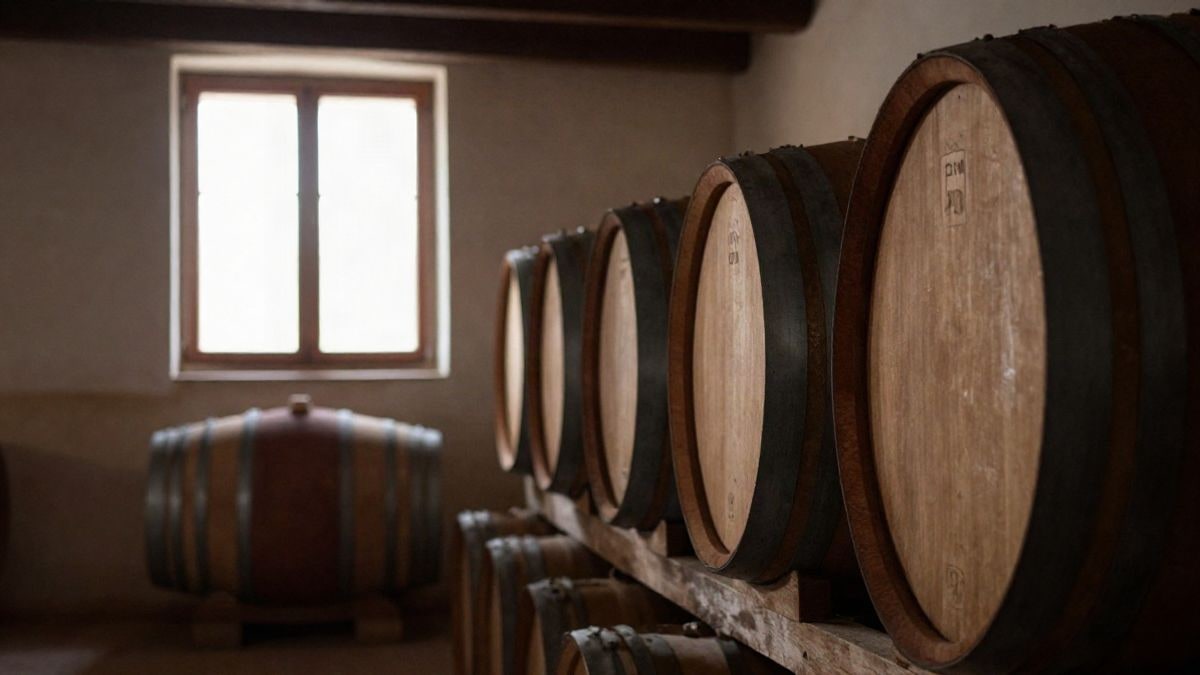
The wine cooperative Nuestra Señora del Socorro, in Rociana del Condado, generates around two million euros and focuses on partially fermented musts to connect with young people. The lack of generational renewal threatens traditional vineyards in the region.
The Cooperativa Vitivinícola Nuestra Señora del Socorro, in Rociana del Condado, has found a goldmine in young people to sustain its activity. According to José Luis Sánchez Romero, the entity's administrative manager, the winery generates around two million euros and has launched partially fermented musts that are revitalising the business. This information is reported by the newspaper elcorreoweb.es.
The cooperative was founded in 1957 to combat the abuses of buyers who imposed prices. Over time, it came to group hundreds of winemakers, but today the lack of generational renewal has reduced the number of members to about a hundred. Sánchez Romero estimates that in a few years there could be between 30 and 40 members left if the trend does not change.
“Where there used to be 300 or 400 members, there are now fewer and fewer; we are currently around 100, and I estimate that in a few years, if this does not change, the trend is that there will be 30 or 40 left.”
The vineyard in the Condado area has shrunk to a tenth of what it once was. According to the manager, grapes have not held the value they should have, and bulk sales have been encouraged. To adapt, Bodegas del Socorro has developed products with lower alcohol content, such as the partially fermented musts they have been producing for six or seven years.
“About six or seven years ago, we started to produce the partially fermented musts, which are now preferred by the new generations because they like something softer than wine, with lower alcohol content.”
Additionally, the cooperative is experimenting with a barrel-aged white, something unusual, and maintains contact with the University of Seville for new developments. The native variety La Zulema is part of its commitment to differentiation.
The cooperative remains a driving force for Rociana del Condado, as almost all families have some connection to the vineyard. The challenge is to professionalise the sector and make cultivation profitable so that young people are encouraged to continue.

You may also like