The Government will begin processing a royal decree that will require 50% of the teaching staff to hold a doctorate and 40% to have full-time contracts, and will regulate attendance in degrees such as health-related fields.
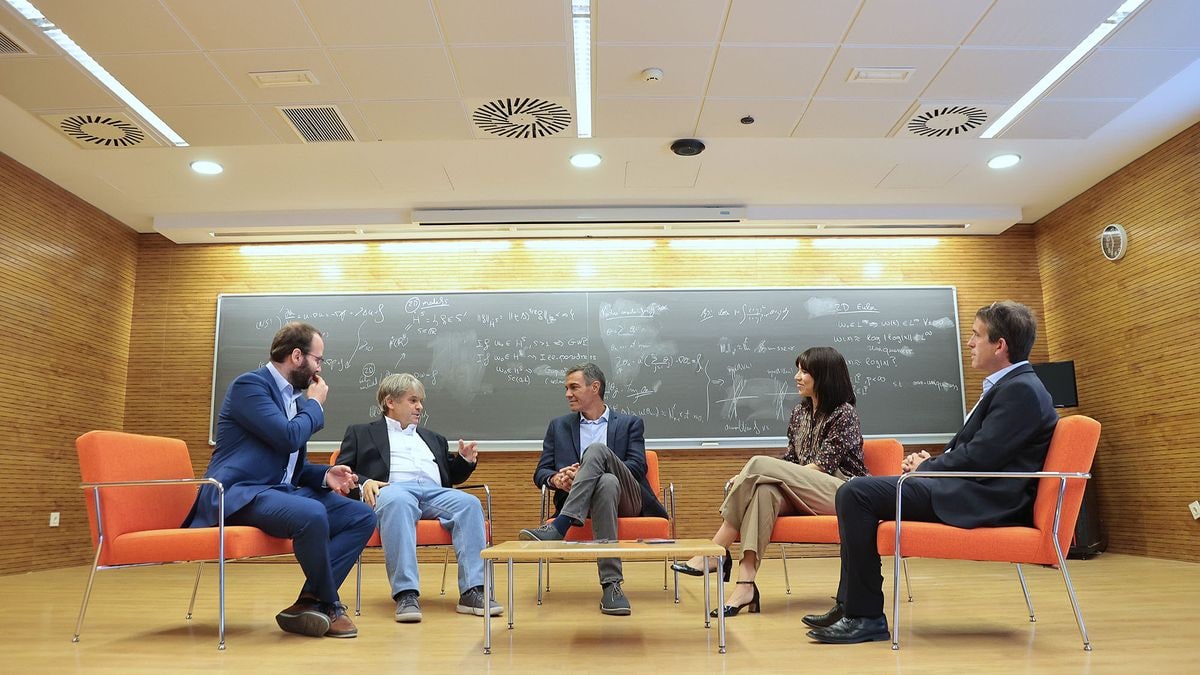
The President of the Government, Pedro Sánchez, announced this Thursday that the Executive will initiate the processing of a new royal decree to establish additional requirements for university degrees. The regulation will be developed with the CRUE (Conference of Rectors of Spanish Universities) and with students, as he explained during his visit to the Institute of Mathematical Sciences (ICMAT) in Madrid, accompanied by the Minister of Science, Innovation and Universities, Diana Morant. The information has been disseminated by lamoncloa.gob.es.
The royal decree will include two main requirements. The first affects the teaching staff: at least 50% of the faculty in each degree must hold a doctorate and 40% must have a full-time contract. The second will require ensuring attendance "wherever necessary, especially in areas such as health," Sánchez pointed out. With these measures, the Government aims to prevent some private universities from expanding their 'online' offerings without meeting quality and attendance standards.
"A university cannot be a beach bar or a franchise selling degrees"
The President justified the measure by the evolution of student enrolment over the last decade: enrolment in public universities has grown by only 3%, while in private institutions it has increased by 128%. In master's programmes, private universities have tripled their students and now surpass public ones. Sánchez attributes this progress to the "underfunding of many public universities" and to political decisions by regional governments such as those of Madrid or Castilla y León. "It is the programmed obsolescence of the public sector: first it deteriorates; then, its offerings are reduced; and finally, the private sector is presented as the only alternative," he stated.
The Executive highlights that direct state funding to universities has increased by 78% since 2018, that public universities receive more than 600 million euros for research projects from the State Research Agency, and that the María Goyri programme transferred over 100 million euros last year for faculty hiring. Additionally, nearly 1.3 billion euros have been allocated for scholarships for the 2025-2026 academic year, which is 42% more than eight years ago. Last year, the Government already tightened the requirements for creating and recognising new universities.
You may also like