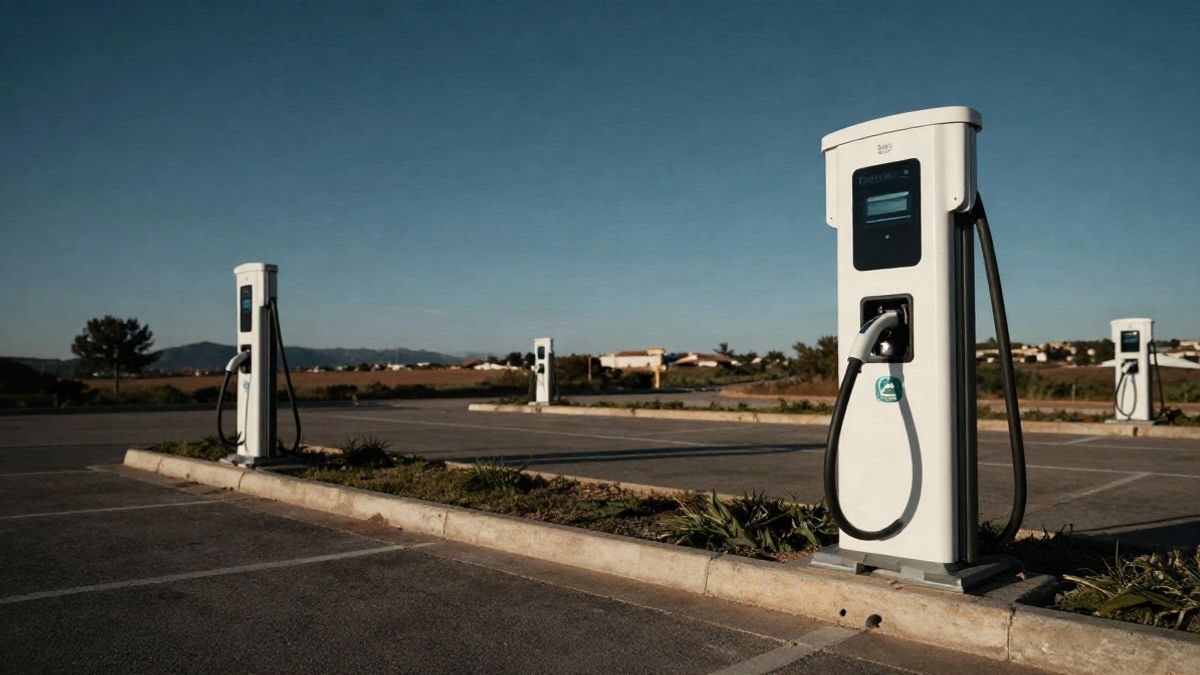
The Spanish government will send a new action framework for alternative fuel infrastructure to the European Commission. Spain currently has over 42,000 charging points and an installed capacity that far exceeds Brussels' targets.
The country has 42,318 charging points for electric cars, with a total installed capacity of 2.26 million kilowatts, which represents 2.66 times the target set by Brussels, according to Expansion.com. By the end of March, there were 391,060 electric vehicles on the road, which requires a minimum capacity of 508,378 kW to meet demand.
The government, through the ministries for Ecological Transition and Transport, will soon send a national action framework to the European Commission for the implementation of infrastructure for alternative fuels. This document will provide an overview of Spain's status in developing the necessary infrastructure for cars, trains, ships, and planes, which account for approximately 42% of energy consumption and 33% of greenhouse gas emissions.
However, Spain still does not meet the requirement to have charging groups of at least 400 kW and at least one individual point of 150 kW every 60 kilometres on its basic road network. Currently, only 324 groups of the 13,903 existing meet these power requirements.
Regarding hydrogen infrastructure, Spain has 23 hydrogen stations, but none of them meet European targets in terms of location, capacity, or accessibility. By 2030, the country expected to have up to 7,500 hydrogen vehicles and 150 hydrogen stations.

You may also like