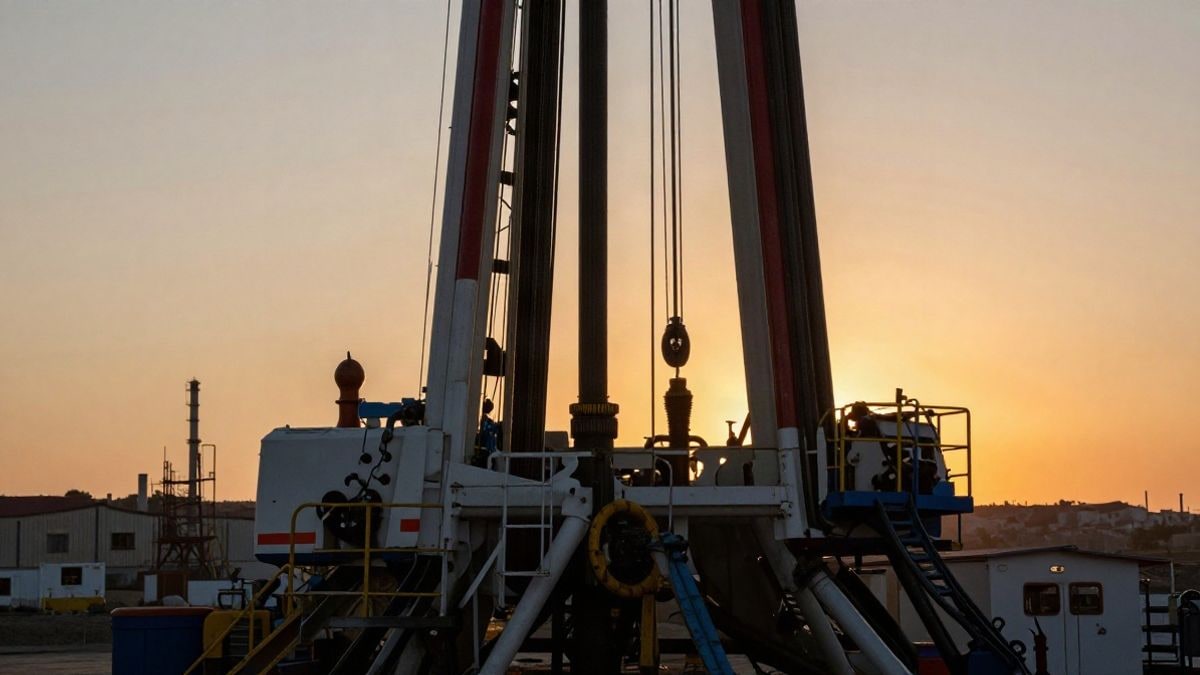
Donald Trump's proposal to control 65 billion barrels of oil in Venezuela aims to increase US reserves and attract investments. However, analysts warn of political risks and the plan's low viability.
Donald Trump has presented a deal to take control of 65 billion barrels of Venezuelan oil, with the goal of increasing US reserves, attracting investments to Venezuela's energy sector, and reducing gasoline prices for American citizens. The information, reported by expansion.com, indicates that the announcement was made last Friday on social media with few details about its implementation.
Experts warn that, although the initiative aims to revitalise the Venezuelan oil industry, it is unlikely to have an immediate impact on fuel prices. Additionally, financial and legal risks could arise for companies interested in participating in this plan.
The agreement could destabilise the interim Venezuelan president, Delcy Rodríguez, if it is perceived that the US government is exploiting the country's natural resources. According to Bob McNally, founder of the consultancy Rapidan Energy Group, “the goal of the United States is to eliminate the risk for long-term private investment,” but political risks in both nations will limit its effectiveness.
If the agreement moves forward, Washington would be granted a 35% stake in North American Blue Energy Partners (NABEP), a company led by Alejandro Betancourt. This would allow the United States to acquire 20% of the production from all fields operated by NABEP, with preferential rights to the remaining 80%.
NABEP is expected to seek to establish joint ventures with energy groups to develop 17 oil fields in Venezuela, with concessions of up to 100 years. However, the White House has indicated that many of these fields had previously been controlled by Russian and Chinese groups.
Despite the potential of the agreement, the US oil industry remains cautious. Major groups such as ExxonMobil, ConocoPhillips, and Chemical have not commented on it, as there is reluctance to invest in a country that has expropriated US assets in the past. Moreover, the technical and financial challenges are significant, given that most of the oil in Venezuela is heavy crude, which requires specialised technology for extraction.
Estimates suggest that the investment needed for this project could reach up to 100 billion dollars over time, and the development of the fields could take 10 years. This raises doubts about whether American consumers will see immediate benefits in gasoline prices.

You may also like