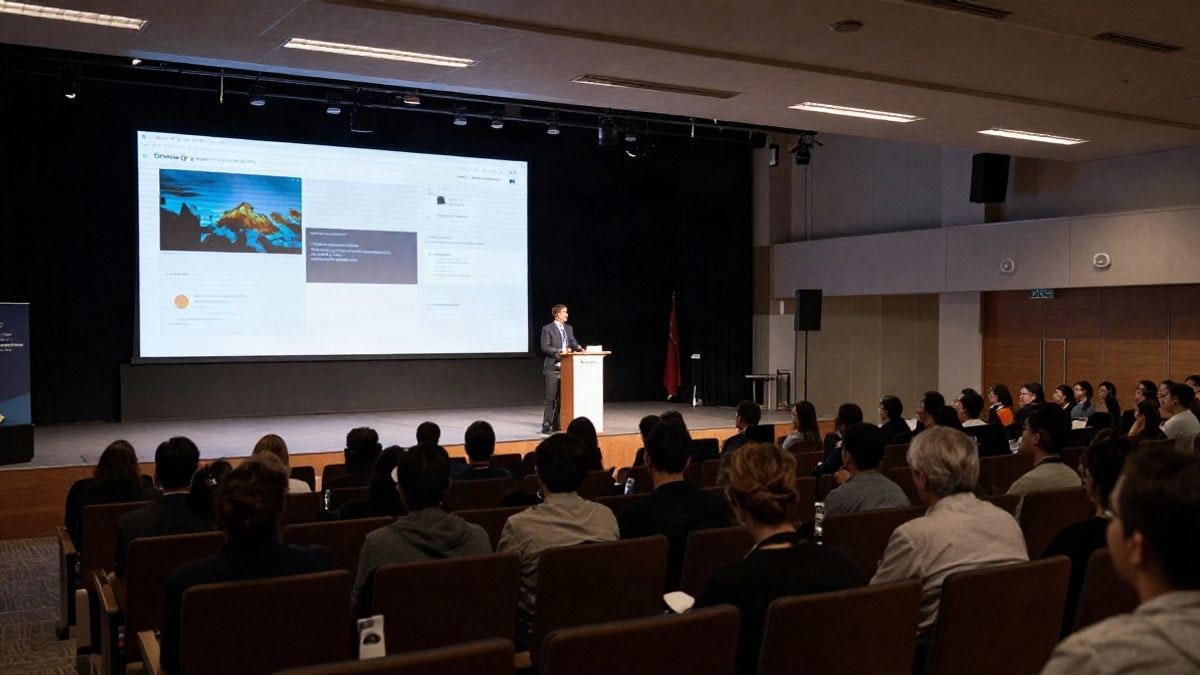
ECB Vice President Boris Vujčić highlighted in Berlin the importance of measuring household expectations to improve the transmission of monetary policy.
The Vice President of the European Central Bank (ECB), Boris Vujčić, defended on Tuesday in Berlin the need for high-quality surveys on household expectations to design a more effective monetary policy. During the inauguration of the Alexander von Humboldt chair by Professor Michael Weber at the European School of Management and Technology (ESMT), Vujčić explained that traditional data is insufficient to understand how citizens form their beliefs about inflation, income, or interest rates.
According to ecb.europa.eu, the Vice President's speech emphasised that household expectations directly influence their spending, saving, and investment decisions, and therefore the transmission of monetary policy. Vujčić noted that the Consumer Expectations Survey (CES) of the ECB allows for representative and almost real-time measurement of these beliefs, thanks to new internet data collection technologies.
The ECB official highlighted that households do not form their expectations like professional analysts; rather, their attention is selective and their beliefs are highly dispersed. Recent research, some co-authored by Weber, shows that food and fuel prices disproportionately influence the perception of inflation, and that there are gender differences in expectations due to exposure to price signals during shopping.
Vujčić also referred to the current context of geopolitical uncertainty. CES data reveals that geopolitical risk can significantly worsen household sentiment and their spending intentions in the eurozone. Therefore, he argued that macroeconomic models should explicitly incorporate these variations and information frictions, and that central bank communication should take into account trust and credibility.
The speech concluded with a reflection on the usefulness of these surveys for interpreting economic shocks, not only through aggregated data but also in terms of how citizens perceive them and expect them to persist.

You may also like