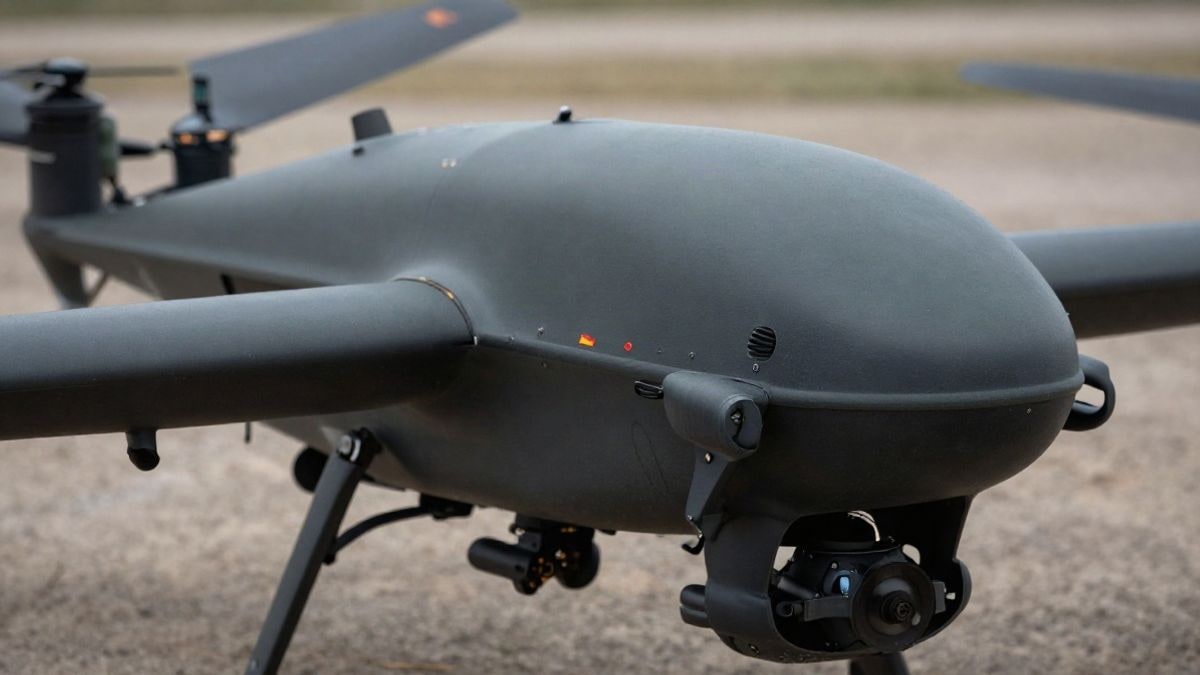
The conflict in Ukraine accelerates the implementation of drones controlled by artificial intelligence in military operations. These devices allow for the identification and attack of targets in less than two minutes, changing the dynamics of combat.
The use of drones equipped with artificial intelligence is revolutionising military strategy in the conflict in Ukraine, according to expansion.com. The Saker Scout, a drone capable of carrying up to five kilos of explosives, can carry out attacks almost autonomously after receiving initial instructions from a human operator.
This device is designed to recognise up to 47 categories of military equipment and can determine the probability of success of an attack. The decision-making speed in combat has drastically reduced from 20 minutes to less than 2 minutes, significantly increasing operational effectiveness.
The attack process is activated within a “strike zone” defined area, where the drone seeks and attacks targets without waiting for new orders, although it has limitations in identifying specific enemies. Rostyslav Olenchyn from Twist Robotics points out that it is crucial to verify that there are no civilians or friendly forces in the area before proceeding with the attack.
The war in Ukraine has been a testing ground for AI technologies, shaping not only the tactics of this country but also those of its allies, including the United States. This approach has also allowed for a notable reduction in operational costs, with the computing power required for AI available for 250 dollars.
However, the reliance on AI also raises ethical and strategic questions, as delegating lethal decisions to automated systems could have serious implications for the future of armed conflicts.

You may also like